
Second Sunday of Advent, December 7th 2025
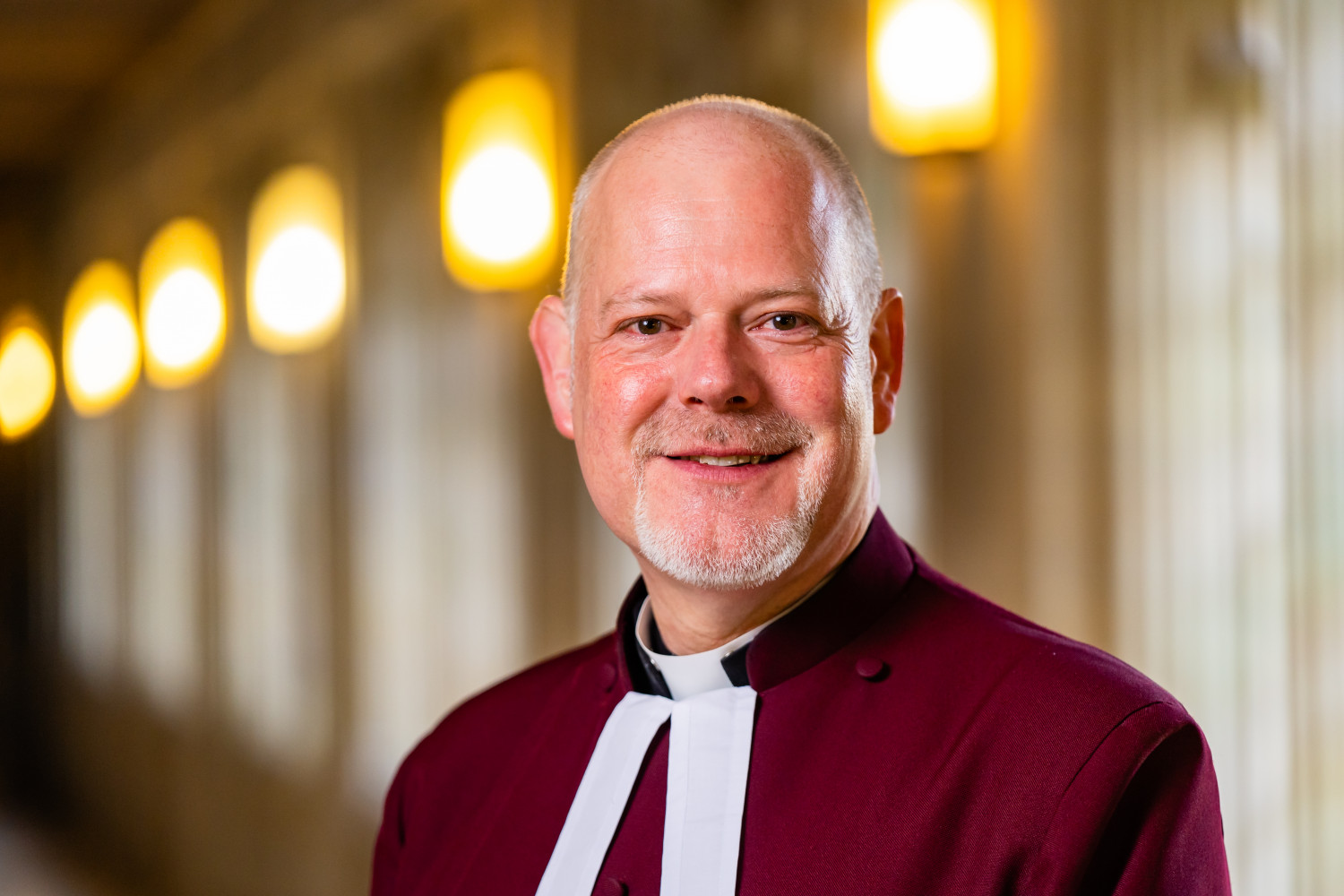
A sermon preached by The Very Revd Joe Hawes, Dean of St Edmundsbury
The preaching of the Baptist is a call to turn again and repent. It’s a call to institutions and individuals to clean house.
John’s ministry, in all four gospels, is both specific and personal and aimed at religious institutions.
No one is spared; soldiers who should not abuse their positions, Herod Antipas who had married his living brother’s wife.
In today’s gospel we hear him critiquing those who rely on their religious ancestry to presume themselves immune from criticism: ‘God is able from these stones to raise up children to Abraham’…
If we worry about the potential for anti semitism in that statement, we need to remember that all of the Abrahamic faiths, Christians included claim Abraham as our ancestor in the faith so that the critique is as contemporary and relevant for us as it was for John’s first hearers.
We Anglicans, and any other religious communities who presume our own exclusive superiority need to hear this call to humility, generosity, renewal.
A wise contemporary theologian I know, when exploring what it might look like to encounter the kind of change and renewal suggested by the word repentance, uses the Biblical analogy of the lung and of breathing to consider our individual and corporate journey of faith in repentance and renewal. Over the course of a human life, and over the millennia of its history, the breathing of the Spirit attempts to lead us, and the Church to breathe in that which is good and life giving, and breathe out that which if not exhaled, poisons and and chokes us.
The Church, and human society has learned to breathe out evil presumptions it once took for granted: that slavery is a God given social order, that women are rightly subservient, that children are property, that our religious opponents are to be persecuted and that God favours one particular ethnicity over another.
In many parts of the world, much of this has yet to be exhaled.Modern slavery persists, women are subjugated, children recruited to kill. John the Baptist’s call to repentance as relevant and urgent as ever.
In order to breathe properly and fully, we have learned that how we breathe our sacred texts is to be under the influence of the Spirit’s guidance; that although we ARE people of the Book, we are not people of the Book only. We are, particularly as Anglicans, people who try, in humility to listen to where traditions leads us and what reason still has to teach us.
For the past five years, the Church of England has been on a journey. Living in Love and Faith has sought to find a way forward in the complex and contested debates around human sexuality and how LGBTQIA people can belong fully, ordained and laity alike, in the Church of England and have our relationships recognised and blessed.
I have not, up until this point, sought to weary you with my own reflections on this tortuous journey, but now that the process seems to have run into the sand and we are as a Church at an impasse, my good friend Mandy Ford, Dean of Bristol, preaching next Sunday at Canterbury cathedral, and I, as deans who have been closely involved with this work, through hundreds of hours and countless meetings, all of which seems to have turned out to be completely fruitless, feel that that the time has come, as those who have lived and breathed this often toxic air, to speak to a Church we love, but of which we have come close to despair.
I, like most other gay Christians have taken a few decades to come to a place in which I can affirm, with heartfelt certainty, that although I get it wrong pretty regularly and need to harken to the Baptist’s cry to repent, who I am in my creation, is essentially what God intended. That I am not an aberration, a mistake on God’s part, but, like all of you, a gift from God, and trying in my life, to be a gift back to God through loving service.
So far so good. Apart from hard line fundamentalists, most of those who take an opposing view to me in the Living Love and Faith debates would affirm the same , and have indeed generously done so. The difference comes when I, as a consequence of believing myself NOT to be an aberration, claim access to the deep and ancient wisdom about human relationships which scripture, tradition and sacrament teach us is marriage. The exclusive, faithful, lifelong journey which we believe is reflected in God’s covenantal relationship with us and Christ’s relationship with the Church. Marriage, which people like me feel called to it. Long for. Are not allowed to enter into. My 37 year relationship has helped me to accept myself , but how many gay clergy have been condemned to lives of loneliness, self denial and self loathing because they’ve been oppressed by the strictures of a hostile Church?
Over the past five years, we have pussyfooted around, allowing to be diluted what we believe to be the holiness of full acceptance and relationship. We have done so in order to make compromise with those who believe this to be unscriptural, unGodly, unnatural. I have played the game myself, building a code of practice, a rickety construct, to try and hold The Church together. The absurdity of which manifests in services which certainly aren’t weddings, where the priest doesn’t actually bless, but in a mealy mouthed compromise, sort of asks God to bless. And which, incidentally, apparently aren’t to be too celebratory so as not to frighten the horses… Honestly, if you had been here for Hugh and Alexander’s Prayers of Love and faith earlier this year and tried to tell the joyful congregation not to celebrate, well, the very stones would have cried aloud, I assure you.
And we have continued to uphold the ban on clergy entering even civil same sex marriages. Ordinands have waited and waited, and some haven’t been able to be ordained. In previous years those brave few who defied the Church and got married anyway lost their licences: which means homes and stipends and communities. And the threat still hangs over us. So those rest of us maintain obedience. Just about.
What, I feel constrained to ask, is life giving, holy and good about any of this? What are we inhaling and exhaling, except the stale, half hearted air of compromise?
The Jesus I encounter in scripture is one whose teaching and practice challenged tradition, treated women, gentiles, the excluded, with compassion and respect. I find nothing inconsistent with his teaching and practice and the full inclusion for which so many long, and towards which in this regard, The Church seems unable to to make progress.
And although it is true that the Church which marries the spirit of the age will end up a widow, I find myself increasingly wondering about how the Church of England can still claim to speak for a nation which has made leaps and bounds towards the inclusion and celebration of its gay and lesbian citizens, while remaining demonstrably institutionally discriminatory against them. Us?
Indifferent though most politicians are to the Church of England, the time will surely come when questions are asked about the continued privileged and established status of a Church which persists in holding, in legislation, such harmful practices. The quadruple lock which exempts the Church of England from compliance with anti discriminatory legislation has surely little time left before Parliament strikes it down. And thus we may be faced with the unedifying spectacle of the State requiring the Church to do what it cannot bring itself to enact synodically.
The House of Bishops met in October. I was there, and spoke to them, pleading for progress. The indicative votes which followed gave none at all. They meet again next week, and if any of them get to hear these words, or what The Dean of Bristol says from the pulpit of Canterbury next Sunday, then let them hear this clearly:
Enough is enough. You may reflect the divisions in the Church, but unlike the Church, you are called to leadership. You have a narrow and closing window in which to lead the Church to a place in which it can breathe out this toxicity of institutional discrimination and breathe in something good and life giving. Repentance which will be missional, which will send a message of hope and inclusion to a whole swathe of society in this country and that is mission. It is not enough to throw your hands up and tell us you cannot act. You have more room than those who advise you tell you that you have. We may be synodically governed, but we are episcopally led. So lead us to a better place. Bring forward a proposal at the very least, for standalone services of blessing for same sex couples, and lift the ban on clergy entering same sex marriage. You actually do have the power to do it, and it is very far from full inclusion, but it would be a start. It would send a message. Breathe in some courage and exhale the paralysis that is trying to deny the Spirit’s grace and power in the lives of gay and lesbian people, their partners, the families, their friends and This Church.
Justin Welby, former Archbishop of Canterbury, in 2017 called for a radical inclusion for LGBTQIA people in the Church. Eight years later what signs do we see of any of this? We need to be able to live together as a Church of true diversity: equal marriage for all and proper services of blessing. And for those parishes and clergy who don’t want to do them, well that’s fine as well. We CAN hold together, without rickety structures of exclusion. Bishops, you have a chance to take a step towards that radical inclusion next week. Do not miss the opportunity. Amen.
Listen to the sermon on the Cathedral YouTube page.


Leave a Reply